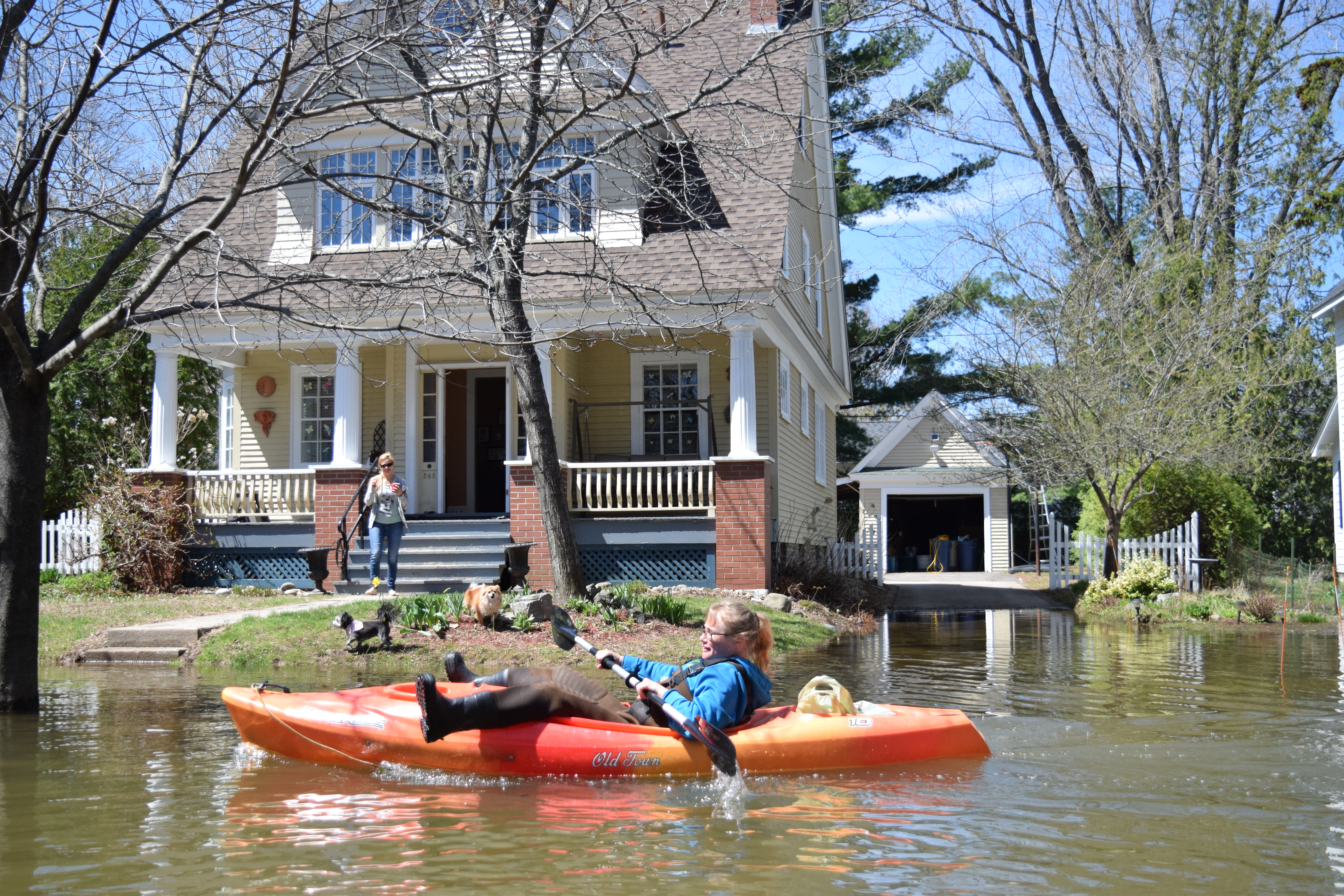
The spring of 2018 will go down in history as the year of the great flood, a flood that swept rapidly across the province, leaving an abundance of damage in its wake. Historically high flood levels affected communities along the St. John River Valley and, as the water began to encroach dangerously on their properties, many tenants, residents and business owners were forced to evacuate their homes, with little time to safeguard them against the rising tides.
David had the chance to check in on some of the people in Fredericton South who were affected, and to see first-hand what they were going through. Thankfully, the waters of the St. John River have receded, giving residents in the affected communities up and down the St. John River Valley, a chance to begin recovery.
While the threat of flooding may no longer occupy the minds of New Brunswickers, the damage left behind is another matter. With that in mind, the Government of New Brunswick is asking anyone impacted by the flood to report it on the damage report line: 1-888-298-8555.
Reporting flood damage will enable the government to assess needs and provide government services like water testing as well as health and safety inspections. It will enable public safety to coordinate debris removal and provide a gateway to provincial and federal funding to help business and homeowners with their clean-up costs.
“With the worst behind us, and with people returning to their homes, the government must start thinking long-term about the realities of climate change and policies to adapt and mitigate its worst impacts,” David said. “We have to find ways to move people away from river banks as was done in Perth-Andover after the devastating flood in 2012, and we have to start thinking about our forests and wetlands as natural infrastructure with the potential to help slow run-off of snow melt, and mitigate the rapid flooding that we observed this year. This kind of long-term thinking takes political courage because it runs right up against the short-termism of four-year election cycles and quarterly financial results. Short-term thinking, however, is a high-risk business, as the St. John River flood of 2018 reminds us all.”
Le printemps de 2018 entrera dans l’histoire comme l’année de la grande inondation, une inondation qui envahit rapidement la province laissant dans son sillage quantité de dégâts. La crue des eaux historique toucha des localités le long du fleuve Saint-Jean et, alors que les eaux envahissaient leurs terres, beaucoup de locataires, résidents et propriétaires d’entreprise furent obligés d’évacuer leurs domiciles sans avoir le temps de les protéger contre la montée des eaux.
David eut l’occasion de visiter quelques résidents de Fredericton-sud touchés par les inondations et de voir ce qui leur arrivait. Heureusement, les eaux du fleuve Saint-Jean se retirèrent et les résidents dans les localités touchées le long de la vallée du Saint-Jean peuvent commencer à reprendre leur vie.
Quoique la menace d’inondation n’occupe plus l’esprit des Néo-Brunswickois, les dégâts sont toujours présents. Ceci dit, le gouvernement du Nouveau-Brunswick demande à tout le monde touché par les inondations de lui signaler les dommages en appelant : 1-888-298-8555.
Signaler les dégâts causés par les inondations permettra au gouvernement d’évaluer les besoins et de fournir des services comme l’analyse de l’eau et des inspections sanitaires. Le signalement permettra à la Sécurité publique de coordonner l’enlèvement des débris et d’offrir une porte d’accès au financement fédéral et provincial pour aider les propriétaires d’entreprise et de résidence avec leurs frais de nettoyage.
« Alors que le pire est derrière nous et que les gens retournent chez eux, le gouvernement doit commencer à penser à long terme à la réalité du changement climatique et aux politiques pour s’adapter et atténuer les pires conséquences, » dit David. « Il nous faut trouver une façon d’éloigner les gens des rivages comme c’était le cas à Perth-Andover après les inondations dévastatrices de 2012, and nous devons commencer à considérer nos forêts et nos terres humides comme une infrastructure naturelle qui peut aider à ralentir l’écoulement de la fonte des neiges et réduire les inondations rapides que nous avons connues cette année. Cette perspective à long terme exige du courage politique puisqu’elle va à l’encontre des cycles électoraux de quatre années et des résultats financiers trimestriels. En revanche, la perspective à court terme est à fort risque comme les inondations du fleuve Saint-Jean en 2018 nous rappellent. »