« We need to know, how much is this actually costing the New Brunswick public? How is this money being spent? Are we getting value for money? It needs to be an open book.We’re not talking about Shannex’s money.We’re talking about public money.-David Coon »
Article by: JACQUES POITRAS
Photo by: JACQUES POITRAS CBC News
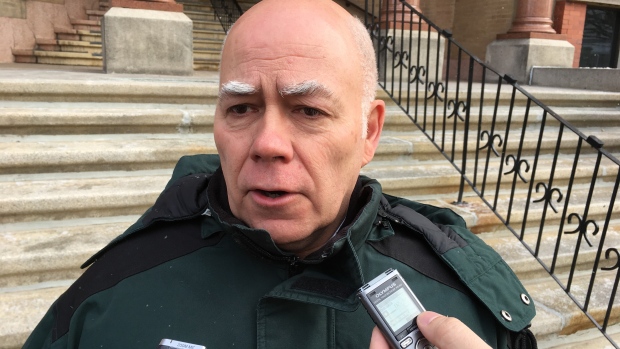
David Coon, leader of the Green Party of New Brunswick, wants the court to order the province to release unredacted copies of the six contracts it signed with Shannex. A private company in Halifax has won the right to argue against the New Brunswick government releasing secret details of its nursing-home contracts.
Court of Queen’s Bench Justice Terrence Morrison ruled Monday that Halifax-based Shannex can intervene in a right-to-information case brought to court by Green Party Leader David Coon.
« Shannex and its interests are at the very heart of this appeal, » Morrison said.- David Coon, Green Party leader
Coon wants the court to order the province to release six contracts it has signed with Shannex, without any redaction.Coon told reporters that with the province giving a greater role to the private sector in a range of government services, the exact terms of contracts — including dollar figures — need to be public.
« We need to know, » Coon said. « How much is this actually costing the New Brunswick public? How is this money being spent? Are we getting value for money? It needs to be an open book. »
Shannex operates two nursing homes in Fredericton and one each in Moncton, Riverview, Saint John, and Quispamsis. Last fall it was chosen to build a new nursing home in Miramichi. The Liberal government of Shawn Graham signed the first agreement with Shannex in 2008.
Then auditor-general Mike Ferguson recommended the province evaluate whether contracts with private companies were less expensive than the traditional community-based, non-profit, provincially subsidized model. That evaluation was never done.
Coon had expected to argue the case Monday against a government lawyer, but Shannex instead sent its lawyer to court to seek intervener status in the case.Lawyer Ryan Burgoyne argued that releasing specific details of the contracts could hurt Shannex by giving competitors an advantage in bidding on future government projects.
« A third party could figure out Shannex’s pricing information by working back, » he said.

photo by-Jacques Poitras
Shannex lawyer Ryan Burgoyne argued that releasing certain details of the contracts might give the company’s rivals an advantage. Government lawyer Allan Morgan supported the company’s request to intervene. He told Morrison Shannex’s arguments would « round out » the hearing.
Coon filed a request for the contracts in 2016 under the Right to Information and Protection of Privacy Act. Seniors Minister Lisa Harris released them a year ago, but with key sections blacked out.Coon appealed that decision to then-Information commissioner Anne Bertrand, who recommended the documents be released in full. She said the information was about public money, not Shannex’s money, and there was no evidence the company would be hurt.
But Harris refused to heed that recommendation, prompting Coon to go to court.Shannex’s application to intervene pushed back the hearing of Coon’s main appeal to Feb. 27.Coon argued against Shannex being allowed to intervene, citing Bertrand’s finding that « the opportunity was there for evidence [of potential harm] to be presented and the department did not do so. »But Morrison ruled that because it was clear Shannex’s business position « may » be affected by disclosure — the legal threshold — he had to give the company standing.
« I have no doubt whatsoever that Shannex has a direct interest in the subject matter of this appeal, » he said. « Its release could — and I emphasize could — be damaging to the financial interests of Shannex. »
The redacted information included « bed days » and per diem rates charged by Shannex, two figures that together determine what the province pays the company. It also included the number of full-time equivalent positions at the nursing homes.
Coon told reporters that even with Shannex intervening, he was confident Morrison would order the province to release unredacted versions of the contracts.
« What we’re talking about is public money to fulfil the public mandate of the Department of Social Development to provide nursing home services to New Brunswickers, » he said. « We’re not talking about Shannex’s money. We’re talking about public money. »
Coon said he has been stymied in several right-to-information requests to the province for details of its contracts with private companies, from what it will pay for a supply of retail cannabis to its lease of space for a tourism welcome centre.
« The secrecy this government has imposed on government operations is unprecedented, » he told reporters.
Burgoyne and Morgan would not comment to reporters after the hearing.
«Les Néo-Brunswickois ont le droit de savoir comment l’argent public est dépensé. En obtient-on pour notre argent?»-David Coon
l’article par: MATHIEU ROY-COMEAU
photo par: MATHIEU ROY-COMEAU Acadie Nouvelle
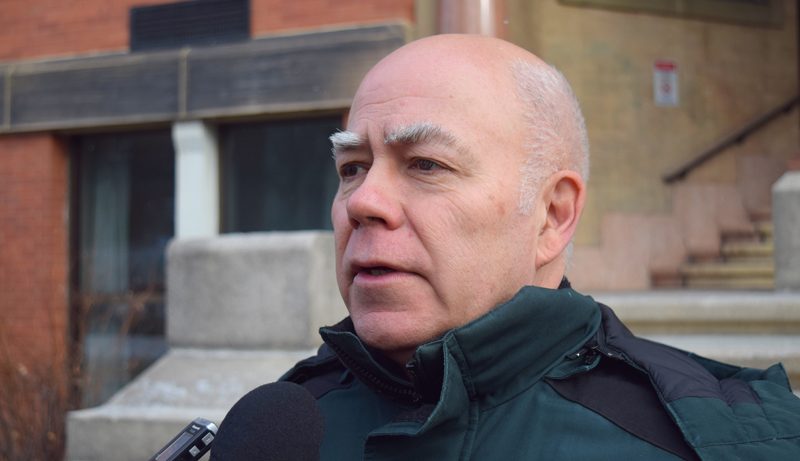
Le chef du Parti vert, David Coon, devant le palais de justice de Fredericton. – Acadie Nouvelle: Mathieu Roy-Comeau
Le chef du Parti vert demande au tribunal d’obliger le gouvernement provincial à faire preuve de plus de transparence en matière de partenariat public-privé dans le domaine des foyers de soins.David Coon s’est présenté au palais de justice de Fredericton, lundi, afin d’obtenir une copie non caviardée des contrats entre la province et l’entreprise Shannex concernant la construction et l’exploitation de plusieurs foyers de soins en partenariat public-privé.
M. Coon veut notamment savoir combien d’argent le gouvernement verse à l’entreprise de la Nouvelle-Écosse pour chaque lit et combien d’employés doivent y travailler.
Les foyers de soins en questions sont situés à Fredericton, à Moncton, à Riverview, à Saint-Jean et à Quispamsis.
Fredericton a refusé jusqu’ici de rendre les contrats publics dans leur totalité malgré l’avis de la commissaire à l’accès à l’information et à la protection de la vie privée qui a donné raison à M. Coon.La province est plutôt d’avis que la publication de ces informations pourrait nuire aux intérêts commerciaux et financiers de Shannex.
«Le premier ministre (Brian Gallant) a indiqué à la fin de l’année qu’il voulait faire plus de foyers de soins en PPP. Nous devons savoir combien ça nous coûte vraiment. Les Néo-Brunswickois ont le droit de savoir comment l’argent public est dépensé. En obtient-on pour notre argent?», a déclaré le chef du Parti vert à sa sortie du palais de justice.
L’audience de lundi devant le juge Terrence J. Morrisson de la Cour du banc de la Reine avait pour but d’entendre la demande de Shannex qui souhaitait obtenir le statut d’intervenant devant le tribunal afin de défendre ses intérêts.L’avocat de l’entreprise, Ryan P. Burgoyne du cabinet Cox & Palmer, a plaidé devant la cour que les intérêts commerciaux et financiers de son client étaient en jeu dans cette affaire et qu’il était donc important qu’il puisse présenter son point de vue.
L’avocat de la province, Allan Morgan du cabinet Stewart Mckelvey, ne s’est pas opposé à la participation de Shannex, tout comme M. Coon.
Le juge Morrison a accordé le statut d’intervenant à l’entreprise et lui a consenti un délai de 30 jours pour préparer ses arguments.
photo par-Jacques Poitras
Les trois parties ont rendez-vous à nouveau en cour le 27 février.Dans son rapport d’enquête à la suite de la plainte du chef du Parti vert, la commissaire de l’époque, Anne Bertrand, indique que les entreprises du secteur privé «devraient s’attendre à ce que certaines informations deviennent publiques lorsqu’elles font affaire avec la province.»
Mme Bertrand a déterminé que la majorité des informations qui avaient été caviardées par la province n’était pas des «renseignements commerciaux protégés» ou des renseignements qui pourraient être utilisés par un compétiteur de Shannex pour nuire à l’entreprise.
Les avocats de la province et de Shannex n’ont pas voulu commenter l’affaire à leur sortie du tribunal.Une porte-parole du ministère du Développement social a indiqué par courriel qu’il serait «inapproprié» pour la province de s’exprimer sur un dossier qui se trouve devant la cour.